Case study · 2025
Citizen Atelier
An art store should sell the artwork, not force the team to upload hundreds of nearly identical framed mockups.
- Shopify Online Store 2.0
- Liquid
- JavaScript
- Metafields
- Discipline
- Figma to Shopify · Product configurator · Art ecommerce
- Year
- 2025
- Engagement
- Fixed scope
- Status
- Live
01Context
- Translate approved Figma layouts into responsive Shopify templates.
- Build dynamic framing behavior for multiple artwork formats.
- Keep product content and frame configuration manageable through Shopify.
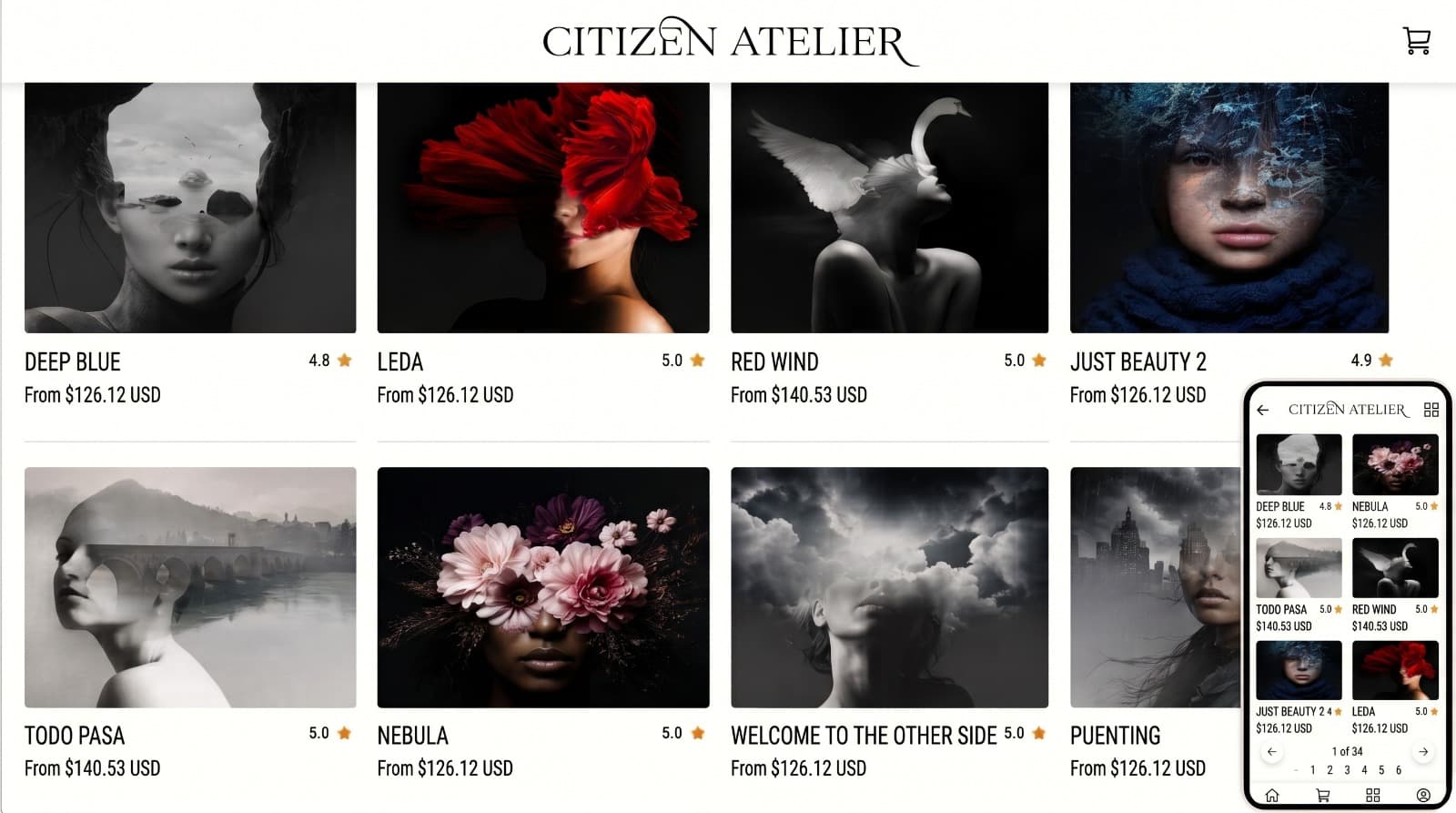
Citizen Atelier sells contemporary wall art where presentation depends heavily on size, orientation, frame style, and print treatment.
The desired Shopify experience required different frame previews without manually producing every possible combination for every artwork.
HeapByte built the storefront from Figma and created a dynamic product experience capable of adapting artwork presentation to customer selections.
02What was in the way
- 01
Combinatorial imagery
Portrait, landscape, and square art each needed multiple frame and print treatments without exploding the media library.
- 02
Two product experiences
Different PDP layouts had to coexist while sharing underlying product configuration logic.
- 03
Premium visual fidelity
Frame proportions and responsive image behavior are especially noticeable in art ecommerce.
03Architecture
What we built, and what we deliberately left alone.
- 01
Orientation-aware previews
Frame rendering responds to the artwork's actual shape and selected configuration.
- 02
Metafield-driven product content
Supporting information, size guides, and product content remain editable within Shopify.
- 03
Reusable PDP architecture
Shared functionality powers multiple product page structures rather than duplicating implementation.
Delivery
- Figma implementation
- Product templates
- Frame preview logic
- Responsive QA
- Content configuration
04Outcome
- Artwork formats
- 3
- Frame options
- Multiple
- PDP layouts
- 2
- Manual mockups
- Reduced
Portrait, landscape, and square
Including black, white, natural oak, acrylic, and print-only states
Separate experiences built on reusable logic
Dynamic presentation limits duplicate image production
05Engineering notes
- Frame composition
- Artwork assets are displayed within frame treatments rather than storing every visual combination as a separate static product image.
- Orientation mapping
- Template behavior adapts based on portrait, landscape, or square artwork metadata.
- Conditional options
- Available treatments can vary without multiplying Shopify products unnecessarily.
- Responsive gallery
- Desktop and mobile experiences preserve the visual hierarchy of the original design.
What we took from it
- 01Visual configurators can reduce both customer uncertainty and merchant content work.
- 02Art ecommerce requires unusually careful responsive image behavior.
- 03Product metadata is often better than hardcoded template branches.
- 04Figma fidelity matters most when components remain reusable afterward.
Disciplines applied
Next case study
BE O Lifestyle Product Customizer
We replaced restrictive personalization apps with a custom Shopify tool for choosing products, colors, uploading logos, previewing artwork, and requesting quotes.
Similar problem?
We will tell you whether this approach fits.
Every store is different. Send us yours and we will say what we would actually do — including when the answer is less work, not more.